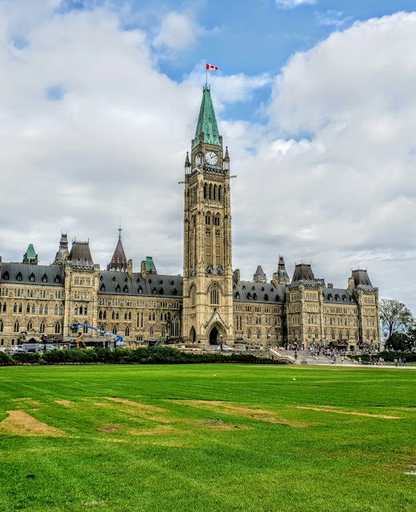
Budget 2026 was tabled on November 5. It runs to hundreds of pages, and most of it (defence, critical minerals, the forest sector) has nothing to do with your household.
This guide covers the parts that do.
Before we start, keep one thing in mind: a budget is a proposal, not a law. Almost everything below still needs its own legislation or regulations before it changes anything, and some of it is only a plan to consult on a change. Where something is already in force, this guide says so plainly. Where it is not, it says "proposes".
Already in force: the bank fee nobody checks
This one comes first because it does not need Parliament and it affects you this month.
In March 2026, new rules capped non-sufficient funds (NSF) fees at $10. Those are the fees your bank charges when a payment comes out of an account that does not have the money in it. Chapter 3 of the budget notes that before the cap they "previously climbed as high as $48".
The same chapter cites the Financial Consumer Agency of Canada's Bank Fee Review, which estimates NSF fees exceeded $1 billion in charges in 2025. That was the largest single consumer cost among the account service charges it measured.
What that means for you:
- If you were charged more than $10 for an NSF after March 2026, call your bank about it.
- If you are paying NSF fees at all, the fee is now the smaller problem. The bigger one is when your bills come out compared with when you get paid.
Also already in force: low-cost and no-cost bank accounts now offer up to 50% more debit transactions for no more than $4 per month. If you picked a packaged account in your first month in Canada and never looked at it again, compare it with these.
Proposed for your bank and your credit card
None of these three is law. All three are in Chapter 3.
The first is a single annual statement of what your bank charged you. The budget "announces the government's intention to develop regulations requiring banks to provide consumers with a single clear annual statement of the fees paid on their chequing and savings accounts, as is currently the case in the European Union and the United Kingdom."
The second would send credit card payments above the minimum to your most expensive balance first. If your card carries a purchase balance at one rate and a cash-advance balance at a higher one, the budget proposes to consult on requiring anything above the minimum payment to go to the highest-rate balance first. That is already how it works in Québec.
The third gives you longer to repay a payday loan. The budget announces an intention to amend the payday lending exemption in section 347.1 of the Criminal Code to extend the minimum repayment time to 42 days, require repayment in instalments, and prohibit credit insurance charges on payday loans.
Proposed for buying a home: read the word "optional"
This is the measure most likely to be reported wrongly, so here is exactly what it says.
Budget 2026 proposes to amend mortgage insurance rules "to raise the home price limit for optional mortgage insurance from $1 million to $1.5 million and permit 30-year amortisations for these insured mortgages, provided that at least one borrower is a first-time home buyer or the home is newly built."
The word optional matters here. Mortgage loan insurance is normally required when you put down less than 20% of the price (CMHC explains that here), and we have a longer walkthrough in our CMHC insurance explainer. This proposal is about the other kind: insurance on a mortgage that did not have to be insured. The government says the aim is to "encourage greater competition between lenders and give home buyers more flexibility".
The budget makes three more proposals alongside it:
- New regulations so that the Bank of Canada publishes information on insured mortgage rates, to help borrowers compare and shop.
- An amendment to the Canada Revenue Agency Act so the CRA could offer lenders and insurers an income verification service, with $13 million over three years starting in 2027-28 to develop and pilot it.
- An intention to consult on transparency around prepayment penalties on insured mortgages, which is the charge for paying a mortgage off early.
None of this changes what a lender will approve for you next week. If you are shopping now, what decides it is still your down payment, your income and the qualifying rate. Our mortgage affordability and stress-test calculators work on today's rules, which are the rules your lender will use.
Money arriving in 2027
There are four measures here. All of them are proposals, and all of them land in the 2027 calendar or tax year.
Canada Groceries and Essentials Benefit Supplement. A one-time 50% increase for the 2026-27 benefit year, paid in early 2027: up to $339 for a single person without children, and up to $679 for a couple with two children. This benefit is the successor to what many newcomers still know as the GST/HST credit. If that is unfamiliar, start with our guide to it.
Canada Caregiver Credit becomes fully refundable. Up to $1,260 a year for 2027, indexed after that. Because it is refundable, you can receive it even if you owe no tax, which is the situation many caregivers are in.
Build Canada Workers Benefit. This replaces and expands the Canada Workers Benefit from the 2027 tax year. The minimum earnings threshold drops from $3,000 to $500 (and from $1,150 to $200 for the disability supplement). The maximum rises from $1,709 to $1,859 for single individuals and from $2,943 to $3,143 for families.
Plan around the second half of that one. The budget also proposes to reduce advance payments by half for the 2027 tax year, beginning July 2027, and eliminate them entirely from the 2028 tax year. Workers would receive the full amount after filing instead. If some of your money now arrives in quarterly advances, your cash flow changes.
National Heat Pump Rebate. More than $2 billion over eight years to help up to 820,000 households install cold-climate heat pumps, with extra support for lower-income households.
Immigration: the numbers, and one new requirement
For a lot of readers, this is the only chapter that matters.
The 2027-2029 Immigration Levels Plan sets targets of 370,000 new temporary resident arrivals and 380,000 permanent resident admissions in each of 2027, 2028 and 2029. For comparison, the budget's own chart puts actual temporary resident arrivals at 971,815 in 2023 and 686,010 in 2024.
The budget also proposes giving up to 200,000 temporary residents already in Canada the chance to become permanent residents by the end of 2027. Of those, 100,000 workers would transition through Express Entry or the Provincial Nominee Program.
One operational change has had almost no coverage. The budget funds a biometrics expansion that "would include a new requirement for visa-exempt travellers applying for an electronic Travel Authorization (eTA) ... to submit a facial image remotely to verify their identity and reduce fraud." If family visit you from a visa-exempt country, that is a new step for them.
We are not going to tell you what these numbers mean for your own application. Nobody can, and anyone who says otherwise is guessing. The figures above are what the document says.
If you own or are buying a small rental
Budget 2026 confirms mortgage insurance changes for "missing middle" housing, and the Department of Finance has published a technical backgrounder with the parameters. The changes come into effect on February 1, 2027.
For new three- and four-unit housing, the rules allow insurance up to 90% of projected value, a 30-year maximum amortisation, a minimum credit score of 600 for at least one borrower or guarantor, no owner-occupancy requirement, and no maximum property value.
For properties of 5 to 50 units, private insurers would be permitted to offer multi-unit insurance. The maximum amortisation would be 50 years on new construction and 40 years otherwise, and borrowers would need a net worth of at least 25% of the loan amount, with a minimum of $100,000, assessed on assets held in Canada.
For a small-scale builder, the single biggest change here is that the owner-occupancy requirement goes away on three- and four-unit builds. If you are running the numbers on a multi-unit, our commercial calculators cover cap rate, DSCR and cash flow.
Canada Strong Notes: what it is, and what nobody knows yet
The budget creates the Canada Strong Fund, a $25 billion national investment fund with a domestic-only mandate that takes minority, non-controlling positions. The technical backgrounder describes a retail product attached to it: a principal protected note, bought through participating financial institutions, with defined maturities such as five, seven or ten years and a base coupon rate.
Four things are true about it today, and they matter more than the idea itself:
- It does not exist yet. The Fund is still designing distribution channels and redemption rights, "with a view to launching the product in early 2027".
- No rate has been published. There is no coupon figure, no return estimate and no minimum purchase. Any number you see quoted for it is somebody's guess.
- Principal protection applies at maturity. The conditions for getting out early are explicitly still being designed.
- A principal protected note is a complex product. It is neither a GIC nor an ETF, and this guide will not compare it to either before the terms exist.
It can be assessed once the terms are published, and not before.
What did not change
Most people need this short section more than the rest.
- TFSA, RRSP and FHSA contribution limits are untouched by this budget. The 2026 TFSA limit is still $7,000, the RRSP limit is still 18% of earned income to a maximum of $33,810, and the FHSA is still $8,000 a year to a $40,000 lifetime cap. The Home Buyers' Plan withdrawal limit is still $60,000.
- The "up to $50,000" first-time buyer figure is not new. It appears in the Minister's speech in the present tense, but it refers to the existing removal or reduction of GST on new homes, a Budget 2025 measure that was already running. Budget 2026 did not create it.
- The FHSA appears in the budget's cost tables only as administrative funding for the CRA to keep running it. That is a line item, not a change to the account.
If your plan for this year was built around those limits, it still works. Our savings and investing calculators run on the same numbers they did last week.
The honest summary
Three things are already law and cost you nothing to act on: the $10 NSF cap, the $4 low-cost account rules, and the fuel excise suspension.
Everything else is a proposal. The mortgage change is narrower than the headline suggests. The 2027 benefits are real money, but you will not see it until 2027. The immigration numbers are the clearest signal in the document for anyone still on a temporary status.
This guide covers Chapter 3 and the two backgrounders that touch household finances. It is not a complete account of Budget 2026, and it does not try to be.
Not financial advice. For educational purposes only. The measures described above as proposals still need their own legislation or regulations before they take effect, and the figures above are as published on November 5, 2026.
Written by Raunaq Singh, Founder of Maple Syrup Money.